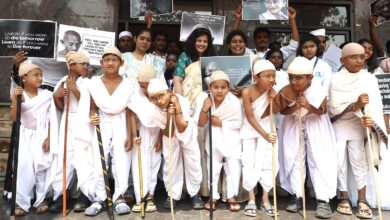
India’s heritage survives through evolving traditions, from Sangam poetry to Sufi qawwali, connecting the past with the present.

That Refuses to Stay Past
From Sangam verse to Sufi qawwali, India’s heritage survives not by standing still, but by being retold, reused and argued over.
There are two ways to meet India’s past. One involves a ticket counter, a laminated map and a protected monument, where the past is kept behind a rope and stays there. The other happens before sunrise on a Tamil street, where a woman bends outside her home and draws a kolam in rice flour. The pattern may be scuffed away by noon. Tomorrow, she Only the first looks like “heritage” in a brochure. The second is closer to how heritage actually works in India: practised, repeated, adapted and passed on, often without anyone calling it heritage at all. The kolam is commonly explained as an offering that ants and birds can feed on, so it is art, ritual and hospitality in one gesture, made to vanish. That logic runs through the oldest traditions the country has. Vedic chanting, recognised by UNESCO in 2008, was transmitted for centuries not through books but through disciplined oral recitation, with elaborate patterns of repetition designed to preserve every syllable and accent. Memory, here, is the archive. Sanskrit tells a similar story: only about 25,000 people named it as their mother tongue in the 2011 Census, yet it is hard to get through a wedding, a school motto or a courtroom without hearing it. A language can lose its everyday speakers and still shape the culture around it. Tamil offers the opposite case, a classical language that has never stopped being a spoken one. Sangam poetry, composed in the centuries around the start of the Common Era, divides life into akam, the inner world of love, and puram, the public world of action and honour, which shows a society thinking carefully about feeling and conduct. In 2004 Tamil became the first language declared “classical” by the Indian government, but it is also taught, argued over and lived every day. A living language is never beyond disagreement over who speaks it and what its future should be. Stories, like languages, survive by being retold. The Ramayana makes the point on a wider canvas: Valmiki’s Sanskrit epic sits beside Kamban’s Tamil retelling, Tulsidas’s Awadhi Ramcharitmanas, Jain and Buddhist versions, and Thailand’s Ramakien. A. K. Ramanujan titled a famous essay “Three Hundred Ramayanas” for good reason. These versions do not copy a fixed original; they show communities questioning inherited stories through their own morals and imaginations. What is true of stories is true of faiths, which have long borrowed from and answered one another in shared spaces. The Ellora caves in Maharashtra hold Buddhist, Hindu and Jain monuments in one landscape. In Delhi, qawwali at the dargah of Nizamuddin Auliya, a tradition linked to Amir Khusrau, turns poetry into devotion. The Guru Granth Sahib sets the Sikh Gurus beside Kabir, Ravidas, Namdev and Sheikh Farid. None of this proves that difference has always been harmonious; it shows that coexistence must be practised, not merely celebrated. will draw it again. Buildings can carry the same layered life. The Brihadisvara Temple at Thanjavur, part of the UNESCO-listed Great Living Chola Temples, is not only a monument to Chola artistry; worship continues there, a thousand years on. Conservation cannot mean sealing every building off as a beautiful object. It means deciding how historic places can stay useful without losing what makes them distinctive. Yet continuity is not the same as leaving everything unchanged. Bharatanatyam is often called ancient, but the form on today’s stages was shaped in the twentieth century by reformers such as Rukmini Devi Arundale, who founded Kalakshetra in 1936. That reinvention helped the dance survive, but the hereditary devadasi communities who had carried the art for generations were largely written out of its respectable new story. Sometimes a tradition survives through transformation, and the transformation carries costs. Craft faces the same test. Madhubani painting began as a domestic art of Mithila, made by women on walls and floors for weddings and festivals, and it now travels on paper and textiles to international markets. Technology is neither villain nor saviour here. The questions are who benefits, whether makers are fairly paid, and whether knowledge is passed on rather than stripped away for quick consumption. Those questions turn protection into a matter of who decides, not only what survives. Manuscripts decay, languages lose speakers, and skills disappear when apprentices can no longer earn a living. A UNESCO listing is a beginning, not a guarantee. Protection should not turn culture into a museum exhibit, frozen for visitors while practitioners struggle outside. Communities must have a say in what is preserved, how it changes and who receives the benefits. The woman drawing the kolam knows this without needing a theory of heritage. By evening, the design will be gone. That is not failure; it is part of the practice. India does not simply possess its past. Every morning, in languages, songs, rituals, arguments and acts of making, it draws that past again.
written by: By Shahid Sarwar